Founder Questions_
How Do I Choose a Manufacturer for My Product?
Start by writing one clear product brief, send it to a shortlist of suppliers with relevant capabilities, and compare their replies on the same basis. Then check a sample before making a larger commitment. Here is what to put in the brief and what to ask.
Where Do I Find Manufacturers, and What Do I Send Them?
Look for suppliers that already work with the materials and processes your product needs. Give every candidate the same version of the brief.
Prepare a One-Page Brief and Attachments
Include product purpose; photos or sketches; dimensions; intended materials and finishes; first-run quantity; sizes/colors; packaging; destination; and desired timing. Attach the drawings you have and clearly mark decisions still open. List required product testing or qualifications where applicable.
Build a Focused Shortlist
Start with three relevant candidates using manufacturing referrals, industry directories, or trade-show exhibitor lists. For U.S. production, NIST MEP’s Supplier Scouting is a concrete starting resource for locating capabilities. Contact the program through its current instructions; introductions are not a guarantee of fit. [1]
Request the Same Quote Breakdown
Ask each candidate for unit price at the same quantities, minimum order, sample cost, tooling/setup cost, sample lead time, production lead time, payment stages, and shipping inclusions. Ask which work they perform themselves and which they outsource.
How Do I Compare the Replies and Verify Capability?
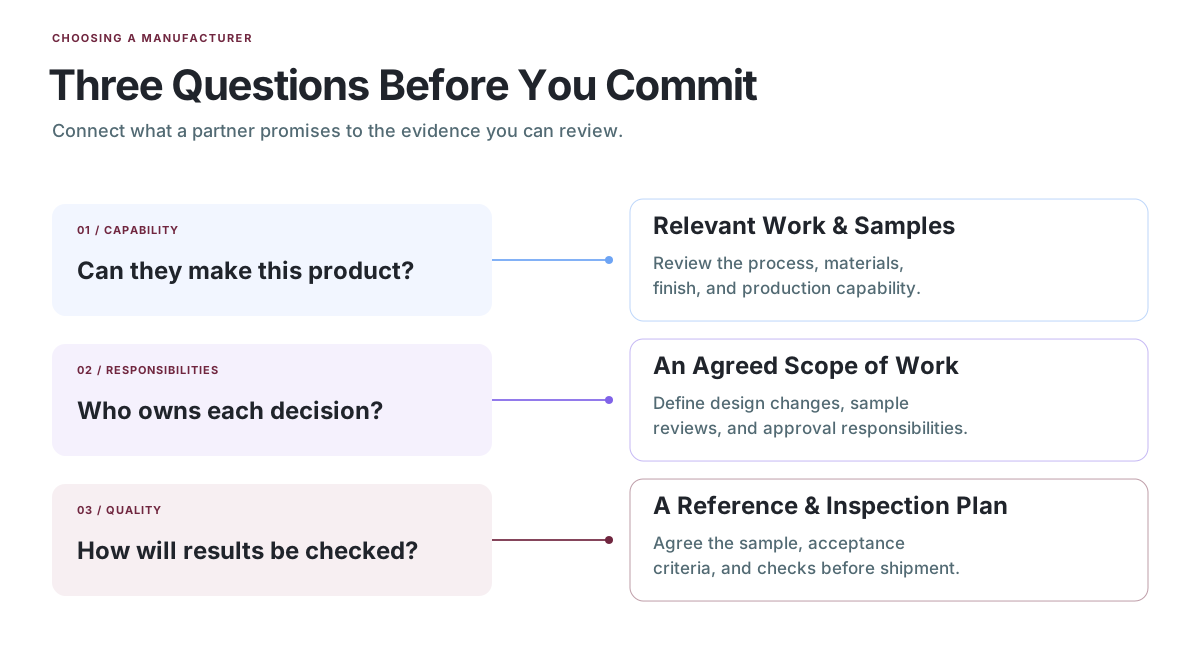
Compare quotes for the same version and quantity, then check the evidence behind the promises. A low price is difficult to assess if the supplier is quoting a different job.
Put Suppliers Side by Side
Use one row per supplier and the same columns as your request. Mark an omitted cost “not quoted.” Ask about exclusions before choosing. Compare the cost to your delivery point, not just the amount leaving the factory.
Ask to See Comparable Work
Request relevant examples, an explanation of the production process, and a conversation with the person responsible for your job. Check the company identity, business location, and which facility would make your product. A directory listing alone does not establish capability.
Confirm Responsibilities in Writing
Record who revises designs, reviews samples, approves changes, and handles inspection. Discuss tooling ownership/access and what happens when a sample fails. Resolve unclear responsibilities before proceeding.
What Do I Check Before Approving Production?
Review a sample against a written acceptance checklist, and keep an agreed reference for the production team.
Define the Acceptance Criteria Before Sampling
List the fit, operation, finish, color, included parts, and packaging that matter. Replace “premium finish” with an agreed physical reference or a specific requirement the supplier can inspect.
Log Issues and Review the Revised Sample
For each issue record a photo, location, expected result, owner, and retest outcome. On Evie, I supplied physical jewelry references for the rose-gold finish so the intended color was tangible.
Agree How the Run Will Be Checked
Confirm inspection points, who checks, what evidence you receive, and how defects are handled before shipment. Consider a trial run where appropriate. A good reference sample still needs a repeatable production process.
Sources & Further Reading
These links answer the specific follow-up questions noted below. Platform guidance checked November 17, 2026; use current terms when planning a campaign.
- NIST MEP: Supplier Scouting
Where can I begin looking for U.S. manufacturing capabilities? This federal manufacturing-support program explains its supplier-scouting route.
- NIST MEP: Supplier Scouting Request Information
What information helps define a sourcing request? Its information sections list technical, business, delivery, packaging, and attachment fields. Use the program’s current instructions before submitting.